
Diagnosis Day
we were too normal to have a kid with cancer

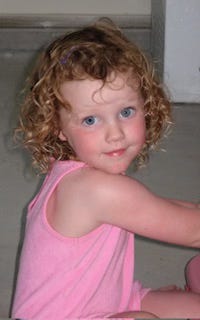
I’ve been working on my book proposal. I want to quit every day. Every. Damn. Day.
I won’t, Instead, I’ll share an excerpt.
Wednesday, the 6th, was Emily’s diagnosis day in 2009. I am a different woman than the one in this piece. In some ways, a better version. In other ways, I miss the gift of ignorance she had about how hard life can be.
***
On the afternoon of Emily’s diagnosis, May 2009, Shane and I waited in the common area room. It was more of a small kitchen than a place to have a meeting. There was a toaster and a basket of Keurig pods on the countertop, a refrigerator, and a round table with four chairs.
For two days, a hematology doctor at Boston Children’s Hospital had asked me every question possible about Emily. What color was her poop? What did she eat? When did she say her first word? How many hours did she sleep? Did I take her for her annual check-ups? When did she say her first word? Had she been sick in the past? Medications? Had she taken any falls? Lost teeth? Was she a happy kid?
Emily was admitted to the hospital. We just want to make sure we’re not missing anything, the doctors said. I convinced myself that whatever was wrong would be easy to fix. We’d pick up a prescription at CVS on our way home and she’d be fine.
I’d made a daily practice of worrying about things that never happened. One of my girls drowning in the tub because I left them alone for two minutes to swap over the laundry. One of them slipping on the stairs in a pair of plastic princess slippers and cracking their head open. Feeding them too many dino nuggets for dinner. Letting Emily eat too many red Swedish fish. But being in a hospital, waiting to see if Emily had cancer, had never been on my radar.
Shane and I didn’t talk while we waited for the doctors. There was nothing to talk about. My Danskos were dirty. Shane was tapping his foot.
The hematology team and the oncology team filled the room in their white coats with embroidered red names. I counted seven doctors but recognized only two from answering the questions about Emily.
“We’re handing over Emily’s case to oncology,” the head hematology doctor said. The day before, he had joked with Emily so she’d let him poke and prod her. His calm energy had made me feel like she was going to be okay. He told me which places close by had the best take-out food. We had shared a mutual hatred of Caillou on PBS.
But in the common room, his energy was different. He pulled at the ends of his stethoscope around his neck. He was apologetic and looked defeated, as if he were responsible for not being able to find and diagnose something less devastating.
“I wish we had better news, he said. Emily has a form of cancer called neuroblastoma.” I immediately thought brain cancer. “Dr. Diller and her team are the best. She’s going to be well cared for.”
The room was floating — or maybe I was.
Dr. Diller eased herself onto the table across from us. Her sensible rubber-soled shoes told me she was a busy woman who didn’t want her feet to ache. She was in her forties, calm but assertive. She was a pro at telling parents their kid had cancer.
My mind couldn’t register what Dr. Diller was saying, so I thought about what was in the refrigerator. Maybe nurses’ lunches, coffee creamer, yogurts, and a leftover Subway sandwich. Or maybe there was a roll-up from the cafeteria. Shane had said they weren’t bad. The turkey was better than the tuna.
Shane shifted his weight from one side of the chair to the other. I wanted to stop Dr. Diller and ask Shane if we were hearing the same thing. Emily had cancer?
Emily’s pediatrician had called me a few days earlier after I insisted on a follow-up appointment. After two weeks on an antibiotic for what her doctor thought was Lyme disease, Emily still couldn’t walk up the stairs. A second round of blood work had suggested leukemia, a death sentence when I was growing up in the eighties. But as Dr. Diller talked about neuroblastoma, it sounded worse.
The odds of survival for neuroblastoma were 50/50. There was no cure if she relapsed. Emily might be eligible for a trial. We’d discuss the details the next day when Emily was admitted to the Jimmy Fund Clinic, a world-renowned children’s oncology center. What was unsure for days was now urgent – neuroblastoma moved fast – We need to move faster, Dr. Diller said.
How did this happen? I did all the right things. I didn’t drink, smoke or eat tuna or deli meat when I was pregnant. I took her to the park, to swimming lessons, and to birthday parties. I read her books every night and rubbed her back until she fell asleep. I sang silly songs in the car and made sure she was dressed well and her hair wasn’t a tangled mess. We were too normal to have a kid with cancer. This happened to other people, not to us. A better woman was meant to mother a kid through cancer.
Shane pressed his hands against his thighs. I didn’t look at his face — I didn’t want him to look at mine. There had to be a mistake. Emily hadn’t had cancer that morning, so she couldn’t have it a few hours later.
Dr. Diller paused long enough to get my attention. Every face in the room looked at me for a reaction. That must have been when parents cried or screamed or asked questions. But I just wanted to leave.
I’d get Isabelle and Emily in the hospital room and drive home where she was safe. Things would be the same as when we left.
But nothing was ever the same again — not my family, not my marriage, not me.
Okay, yes please to this book, Amy. Go get that book proposal done. This is excellent, vulnerable, moving writing. I am sending all of the best juju to you, Isabelle and Emily.
This is painfully beautiful bc you put us right there. Beautiful is a terrible word bc ofc it isn’t beautiful— but the way you write is beautiful.
There is no timeline for you to write. Take your time and write it as it comes. From what you’ve got here, you’ve got a story to tell and you’re doing wonderfully.